The exhibition is over. But the signals it sent are worth paying attention to.
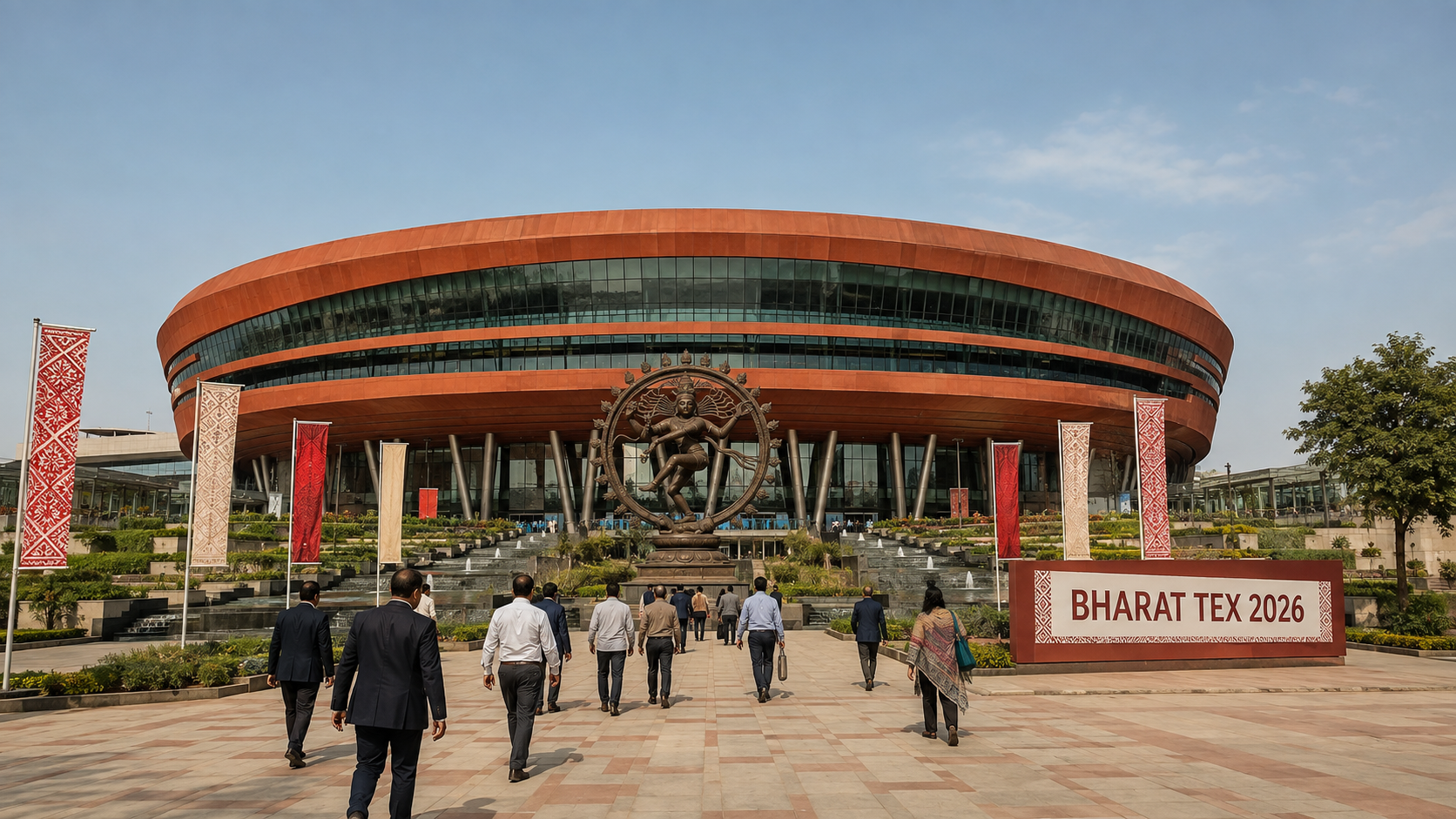
Bharat Tex 2026 was India's largest textile gathering, with 7,000 buyers, 1,600+ exhibitors, manufacturers, traders, exporters, buyers, policymakers, and technology providers under one roof.
But the numbers aren't the story. The direction is.
Three themes came up repeatedly, which are worth understanding if you run a textile business in India.
1. Technology Is No Longer Optional
One of the clearest messages from Bharat Tex 2026: textile businesses that run on manual systems are falling behind.
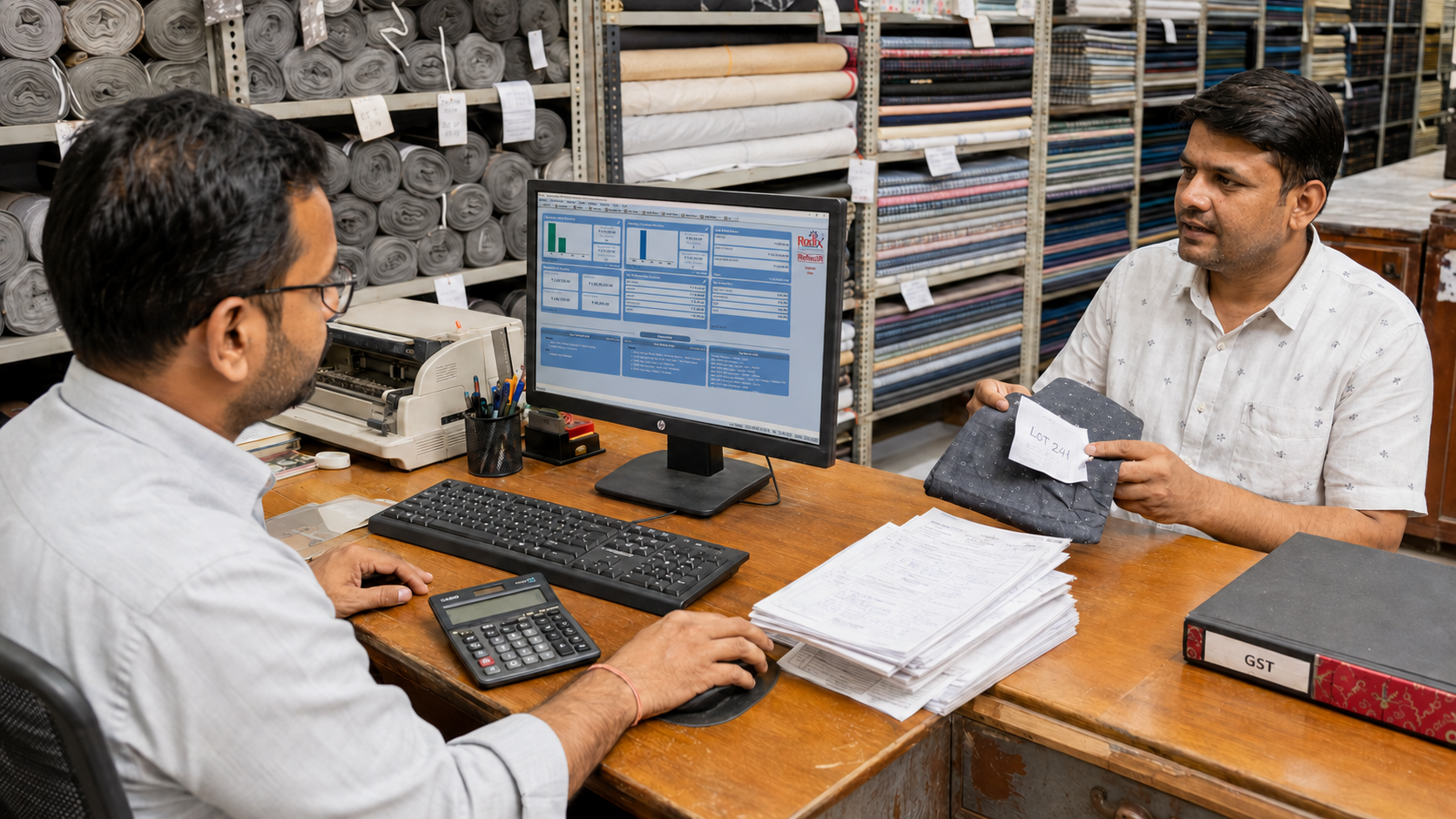
This isn't about large enterprises adopting expensive systems. Small and mid-sized textile manufacturers and traders are actively moving toward digital solutions for inventory management, production tracking, billing, and business reporting.
As a textile business grows, operational complexity increases. More lots, more designs, more customers and suppliers, more job work, and stricter compliance requirements all have to be managed together. Managing all of this manually creates errors that cost money. A stock mismatch, a missed delivery entry, a wrong HSN code: each one is small on its own. Together, they add up to losses the owner doesn't even see.
The businesses at Bharat Tex that were growing confidently had one thing in common: their operations ran on a system, not on a person's memory.
The question is no longer whether to move to a system; it's which part of the business to start with. For many businesses, inventory and billing are the right starting points, since that's where the most data is generated and the most errors occur.
This is where textile-specific software becomes important. Tripta has been building accounting and inventory software specifically for textile businesses since 1995, with lot-wise tracking, job work management, GST billing, and real-time stock visibility built into the core of how the software works.
2. Sustainability Is Becoming a Buying Criterion
Many buyers in the US and EU are changing what they ask for.
Buyers want to know where material came from, how waste is managed, and how much energy was used in production. If you're exporting or planning to export, being able to show where your material came from and what happened at each stage is increasingly becoming a buyer or compliance requirement.
For domestic businesses, this is a future signal, not immediate pressure. But businesses that build clear records now will be better placed when these requirements reach the domestic market.
Lot-wise tracking, vendor records, and documented inward and outward movement are the foundation of this kind of record-keeping. The businesses that already have these in their system are ahead.
3. Innovation Is Opening New Categories
Bharat Tex 2026 showcased the growing importance of technical textiles, which are materials built for specific uses in healthcare, infrastructure, automotive, sports, and defense.
The Union Budget 2026-27 introduced the National Fibre Scheme and the Textile Expansion and Employment Scheme—both aimed at modernizing traditional clusters and upgrading technology.
For manufacturers focused on grey fabric, yarn, or garments, technical textiles represent a new direction worth exploring over the long term.
Three things are becoming true at the same time:
Compliance is getting stricter. GST, e-invoicing, e-Way Bill, and ITC validation are all moving toward real-time checking. Gaps created by manual processes are increasingly difficult and costly to correct.
Buyers are becoming more particular about records and documentation. Businesses that can show clear records will be better positioned to win business.
Keeping waste low is the new competitive edge. When margins are tight, the businesses that waste less time, less material, and less money on errors are the ones that survive.
All three point in the same direction: textile businesses need better systems that actually track what's happening in the business in real time.
What is Bharat Tex, and why does it matter for Indian textile businesses?
Bharat Tex is India's largest textile exhibition, bringing together manufacturers, traders, exporters, buyers, and technology providers. It matters because the themes discussed there reflect where the industry is heading and what businesses need to prepare for.
What was the biggest talking point at Bharat Tex 2026?
Technology adoption, specifically how small and mid-sized textile businesses are moving toward systems for inventory management, billing, and compliance. Manual operations are increasingly being recognized as a source of business risk.
How can textile manufacturers prepare for requirements from global buyers?
Start with lot-wise tracking and documented inward and outward movement, keeping a complete record of where material came from, how it moved, and where it ended up. International buyers are beginning to require this level of documentation.
What software do textile businesses use for inventory and accounting management?
Textile-specific software, like Tripta Accounting Software, is built for the workflows textile businesses actually run: lot tracking, job work, taka-wise inventory, GST billing, and real-time stock visibility. Generic accounting tools often miss these textile-specific requirements.
What are technical textiles, and should Indian manufacturers pay attention?
Technical textiles are materials built for specific functional uses in healthcare, infrastructure, automotive, sports, and defense. India is investing in this space through new government schemes. For traditional textile manufacturers, they represent a new direction to explore over the long term.
The textile industry in India is changing and changing fast. The businesses that read what Bharat Tex 2026 was signaling and act on it will be better placed in the next three to five years.
The ones that don't will find the gap between themselves and the market getting harder to close.
Leave a comment