
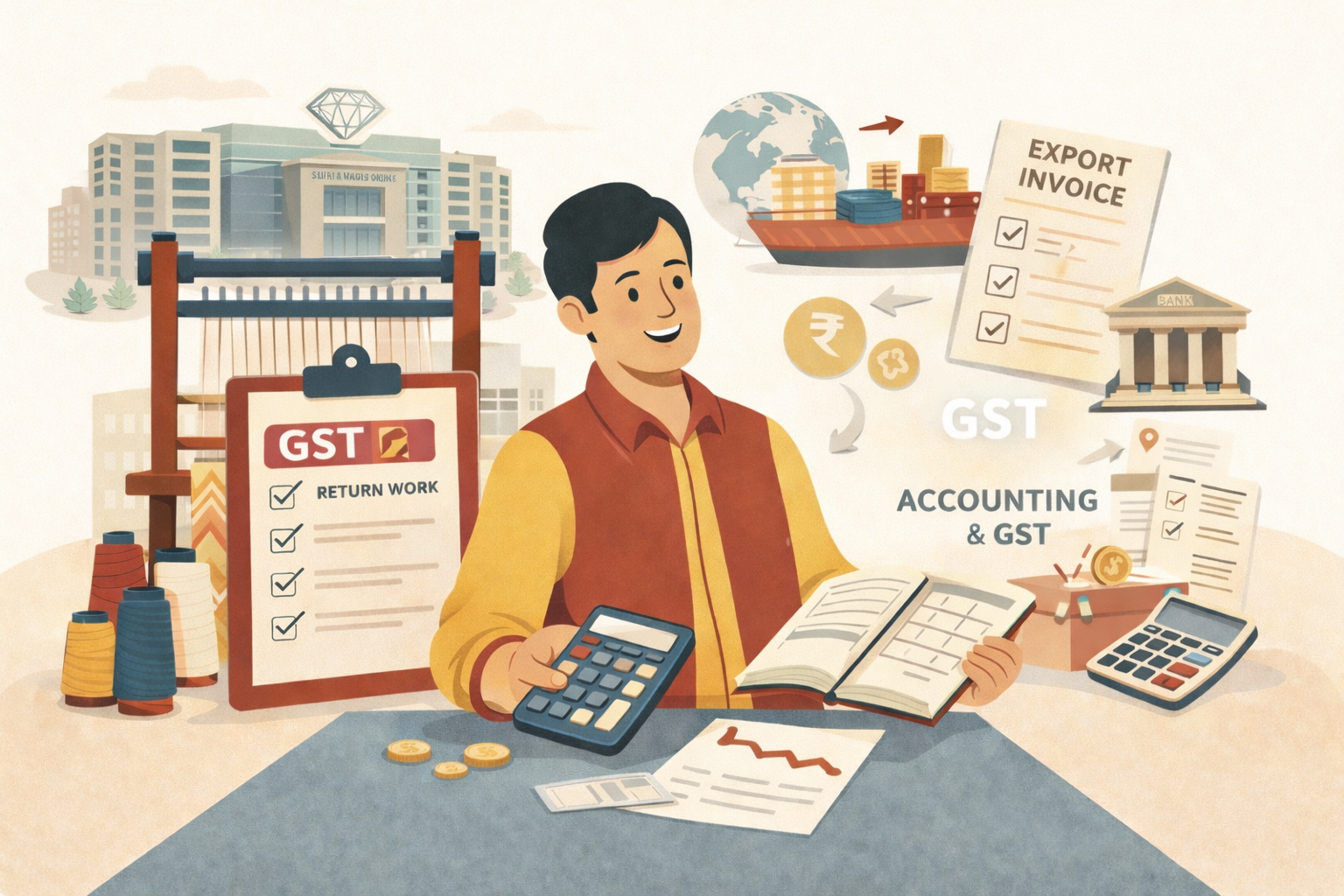
You may have seen this news recently.
The Government of India has chosen Surat as one of only 6 cities in the whole country for a special Textile Export Facilitation Centre (TEFC). This centre will help small textile businesses like yours sell fabric to other countries.
This is big news for Surat.
Surat already makes more fabric than almost any city in the world. Now, the government wants to help Surat's textile MSMEs go global.
But here is the real question - is your business ready to export?
The government is setting up a TEFC in Surat. It will help small and medium textile businesses start exporting fabric from India.
They will help you with:
This centre is made for businesses just like yours - small fabric traders, power loom owners, embroidery units. You do not have to be a big company to use it.
If your business is small or medium in size, you are what the government calls an MSME.
Being an MSME is actually a big advantage when you export. You get:
But to get these benefits, one thing is very important.
Your MSME Udyam registration must be up to date.
Many Surat textile businesses are not yet registered. Or their details are old. If your accounts do not match your registration, you can quietly lose benefits that are rightfully yours.
Right now, you sell to buyers in India. Simple.
You raise a bill. They pay in rupees. Done.
When you start fabric export from India, things are a little different:
This money you can get back is called a GST refund for exports.
Many small business owners in Surat lose lakhs every year simply because their accounts are not set up correctly for export.
Say you sell man-made fabric worth ₹10 lakh to a buyer in Dubai.
Under Indian law, exports are charged 0% GST. This is good for your buyer. But it also means you can claim back the GST you already paid on your raw materials and production.
This refund can be a big amount - especially for synthetic fabric and MMF textile exporters in Surat.
But to get this GST refund, your billing must be done correctly. The right invoice format. The right GST entries. A document called LUT (Letter of Undertaking) must be filed before you ship.
If there is even a small mistake - refund gets stuck. Sometimes for months.
When you sell inside India, your invoice is simple.
When you export fabric from India, your invoice needs extra details:
If you do not have an IEC code, that is the first thing to get. You cannot legally export without it.
The Export Centre is coming. The opportunity is real. Here is what you can do right now:
Surat's fabric is already world-class.
The only thing that stops most small textile businesses from going global is not the product. It is the paperwork. The accounts. The compliance.
Other cities - Ludhiana, Jaipur, Varanasi, Karur, Ichalkaranji - are also getting this same Export Centre. Competition will be real.
The businesses that get their accounting right from day one will move faster, claim their refunds on time, get better loans, and grow smarter.
At Tripta Innovations Pvt Ltd, we help textile MSMEs set up their accounting the right way - so that when the opportunity comes, you are ready to grab it.
Whether you are just starting to think about export or already taking your first steps, we make sure your books, your GST, and your compliance are all in order.
Your fabric is ready. Let's make sure your business is too.

Leave a comment